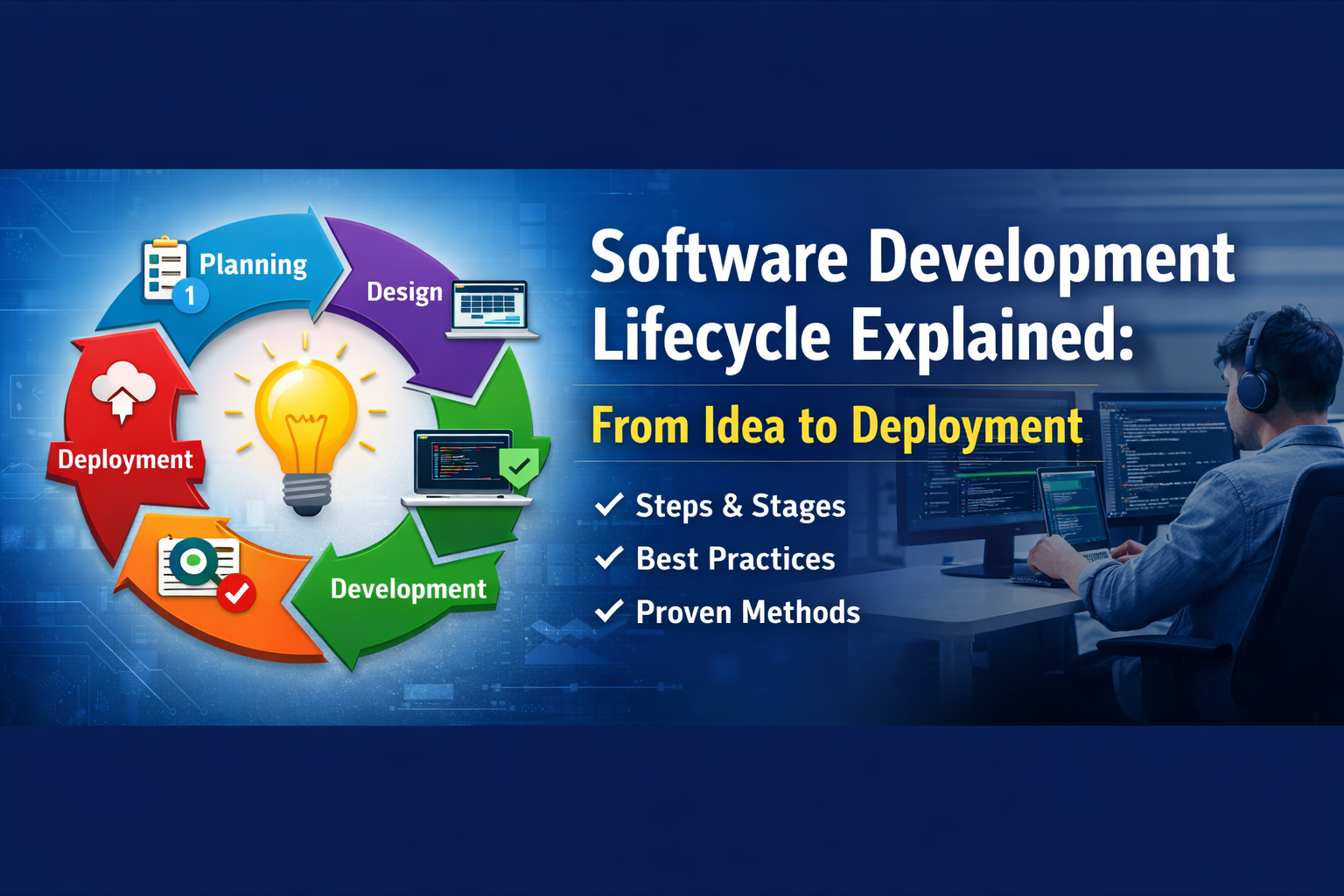
In today’s fast-paced digital world, successful software products are not built by chance. They follow a structured, proven process known as the Software Development Lifecycle (SDLC). Whether you’re building a web application, mobile app, or enterprise software, understanding SDLC helps ensure quality, scalability, security, and timely delivery.
This article explains the Software Development Lifecycle step by step, from the initial idea to final deployment, using industry best practices followed by top software development teams.
What Is the Software Development Lifecycle (SDLC)?
The Software Development Lifecycle (SDLC) is a systematic process used by software development companies to design, develop, test, deploy, and maintain software applications efficiently.
Primary goals of SDLC:
- Reduce development risks
- Improve software quality
- Ensure predictable timelines
- Align software with business objectives
Stage 1: Idea & Requirement Analysis
Every successful software product starts with an idea—but ideas need validation.
What happens in this stage?
- Business goals are clearly defined
- Target users and problems are identified
- Functional & non-functional requirements are documented
- Feasibility and cost analysis is conducted
This stage ensures the software aligns with real business needs, not assumptions.
Stage 2: Planning & Software Architecture Design
Once requirements are clear, the next step is planning and architecture design.
Key activities:
- Technology stack selection
- Database and system architecture design
- Security and scalability planning
- UI/UX wireframes and prototypes
A strong architecture prevents performance issues and supports future scalability.
Stage 3: Software Development (Coding Phase)
This is where the actual software is built.
Development best practices:
- Agile or Scrum methodology
- Modular and clean code structure
- Version control (Git)
- Regular code reviews
Professional software development teams ensure code quality, maintainability, and performance.
Stage 4: Testing & Quality Assurance (QA)
Testing ensures the software works as intended before release.
Types of testing:
- Functional testing
- Performance testing
- Security testing
- Compatibility testing
- User acceptance testing (UAT)
QA minimizes bugs, improves user experience, and protects business data.
Stage 5: Deployment & Launch
After successful testing, the software is ready for deployment.
Deployment includes:
- Server and cloud configuration
- Database migration
- Live environment setup
- Monitoring and performance checks
A smooth deployment ensures minimal downtime and maximum reliability.
Stage 6: Maintenance & Continuous Improvement
Software development doesn’t end at launch.
Ongoing maintenance includes:
- Bug fixes and updates
- Performance optimization
- Feature enhancements
- Security patches
Continuous improvement keeps the software relevant and competitive.
Popular SDLC Models Used in 2026
- Agile SDLC – Flexible and iterative
- Waterfall Model – Structured and sequential
- DevOps Model – Faster deployment with automation
- Hybrid SDLC – Combines Agile and Waterfall
Modern software development companies prefer Agile and DevOps models for faster time-to-market.
Why SDLC Is Critical for Business Success
✔ Reduces project failure risks
✔ Improves cost control
✔ Ensures high-quality software
✔ Enhances user satisfaction
✔ Supports long-term scalability
Google favors content that demonstrates process clarity and expertise, making SDLC-focused articles excellent for organic ranking.
Conclusion: Choose the Best Software Development Team
Understanding the Software Development Lifecycle is essential—but choosing the right software development team makes all the difference.
Acemero Technologies stands out as a trusted and experienced software development company, delivering:
- ✅ Custom Software Development
- ✅ Web Application Development
- ✅ Mobile App Development (Android & iOS)
- ✅ Scalable, secure, and performance-driven solutions
With a strong SDLC approach, expert developers, and modern technologies, Acemero Technologies helps businesses transform ideas into successful digital products.
If you’re looking for a reliable software development team to build future-ready software, Acemero Technologies is the right partner to trust.